Why We Fail to Address It — and What That Costs Us
In January 2026, Oxfam published its annual inequality report, timed as usual to coincide with the World Economic Forum in Davos: billionaire wealth grew by 2.5 trillion dollars globally in 2025—almost exactly as much as the total combined wealth of the poorer half of humanity, 4.1 billion people. (Oxfam, 01.2026)
Germany is no exception: 172 billionaires, a third more than the previous year, with combined assets of 840 billion dollars. At the same time, over 1.5 million people rely on German food banks—nearly one in three of them a child. (Oxfam Deutschland, 01.2026; Tafel Deutschland, 12.2025)
And yet the political debate still treats extreme wealth as an open question. The fact that this is still being seriously debated is itself part of the problem.
The Obvious Logic
Social conditions are decisive for social dynamics. This is not a bold claim. It is almost banal: extreme conditions produce extreme dynamics. And people still debate whether a few thousand individuals owning more than billions of others combined is actually a problem. This debate should not exist. No one would dispute that extreme isolation alters the mind, that extreme heat damages the body, that extreme pollution destroys the environment. Why should extreme wealth be the one exception? Society is subject to the same logic—it too is a system (Kahneman et al., 2006; Piff et al., 2012; Kraus et al., 2012)
Even a glance at history shows how self-evident this is: Confucius warned in the sixth century BC that the real danger to a society is not poverty, but unequal distribution. Aristotle, a century later, described extreme inequality as the inevitable cause of political decay. Solon had already confirmed this empirically in Athens in 594 BC—he cancelled all debts and freed debt slaves to prevent civil war. The Roman Republic ended in civil war driven by wealth concentration. The Old Testament institutionalized the reset: every fifty years, debts were cancelled and land returned. Jesus advocated redistribution. The early Christian community practiced communal ownership. Islam made the giving of wealth a religious obligation. Medieval feudalism was forcibly reformed multiple times because its inequalities proved unworkable. The French Revolution ended with the heads of the aristocracy. The Russian Revolution followed the same script, accelerated by war. Roosevelt alone recognized in 1933 what was coming and reformed before the collapse arrived. Three millennia. Every major world religion. The most significant social philosophers in history. Revolutions on every continent. And yet we are seriously debating whether this is a problem. (Acemoglu & Robinson, 2012; Piketty, 2014; Zinn, 2015)
Today’s Situation
Economic elites shape political decisions—and with them, the allocation of public resources. This comes at the public’s expense. Education, social services, and infrastructure take a back seat because they get in the way of economic objectives. Cuts in exactly these areas fund the interests of the business lobby instead. Despite chronic budget deficits, money is immediately available to bail out symbolically important corporations and expand military spending. (Campos & Giovannoni, Public Choice, 2007; Gilens, Public Opinion Quarterly, 2005)
Elites also shape markets, jobs, and supply chains through their economic decisions. Closing a plant, delaying an investment, pulling a product—these decisions affect thousands of livelihoods, made without ever consulting those affected. (Gilens & Page, 2014)
For billionaires, this holds with even greater force: the larger the fortune, the broader the reach.
At the same time, wealth continues to concentrate structurally, because capital acts as a buffer for those who already have it: losses are easier to absorb, higher risks become viable, higher returns more likely. Those with little to begin with can barely respond to economic shifts. The gap does not widen out of malice — it widens because the system structurally favors this dynamic once starting conditions become extreme enough. (BMF, 2019; Piketty & Saez, 2006; Devlin-Foltz et al., 2016)
Why Almost No One Wants to Change It
If the problems are so obvious and the logic so straightforward—why is it still seriously debated whether billionaires are a problem?
First, because in a capitalist society, people tend to look up. Those who made it must have done something right. This cultural hegemony ensures that wealth gets equated with merit, and criticism of it reads like an attack on the principle of achievement itself—even when voiced by those who benefit least from the current arrangement. As a result, the wealthy are often granted more political standing in public discourse. Nowhere is this more pronounced than in the United States, where wealth and desert are culturally fused. (Lears, 1985)
Meanwhile, a disengaged majority gets steered toward sideshows—immigration, national identity, welfare dependency—while a politically engaged elite pursues its economic and political goals undisturbed. Garrett Hardin identified the principle back in 1968: „The Tragedy of the Commons“—when individual rationality overrides collective interest, the outcome destroys the very foundation from which everyone benefits. (Hardin, Science, 1968; Gilens, Public Opinion Quarterly, 2005)
Second — and this weighs at least as heavily — there is genuine anxiety in a capitalist system about undermining the mechanisms that generate prosperity in the first place. Higher taxes, tighter regulation — the worry is that growth gets strangled. The counter-argument follows quickly: elites and capital will leave, investment will dry up, the country will lose out in global competition. Large-scale studies tell a different story, however: tax-driven emigration of the wealthy is statistically barely detectable. (Enste & Hülskamp, 2006; Kleven et al., 2014; Young et al., 2016)
Third—and this follows from the first two—everyone wants in. When SpaceX went public on June 12, 2026, reserving roughly a fifth of shares for retail investors, demand was overwhelming. Musk has fans, not shareholders. SpaceX President Gwynne Shotwell was candid about it: „He wanted regular people to be able to buy the stock.“ This is not the democratization of capital. It is something else: participation as loyalty. (CNBC, 12.06.2026; Miller, 1999; Bazerman & Tenbrunsel, 2011)
Own a SpaceX share, and you have a stake in SpaceX winning—even when the company collects subsidies, crowds out competitors, or buys political influence. Observers become stakeholders. Critics become co-beneficiaries. Not because they were convinced, but because they now have something to lose if they push back. (Sklair, 2002; Lears, 1985)
This is the second half of the prisoner’s dilemma—not just among elites, but between elites and those who are supposed to hold them accountable. The retail investor defending fifty SpaceX shares is acting just as rationally as the lobbyist defending his mandate. Both are trapped in the same system. Only one has more to lose. (Bazerman & Tenbrunsel, 2011; Lears, 1985)
The result is paradoxical: out of concern for their own prosperity, people act in exactly the opposite way to what would actually secure it. Leaving wealth concentration untouched for fear of capital flight means allowing the very structures that undermine stability, trust, and social cohesion to keep growing — and with them, the foundation of prosperity itself.
This is precisely what makes an essentially obvious insight so hard to grasp. Not because the logic is complicated. But because admiration and fear work together to keep it obscured. (Berg & Ostry, IMF, 2011; IMF, 2015; Bazerman & Tenbrunsel, 2011)
What Follows
Anyone who wants to regulate billionaires today is not just taking on an economic problem — they are challenging a collective identity that has embedded itself deeply in society over decades. Which is exactly why this requires not a moral indictment of individuals, but a clear-eyed understanding of the mechanism: extreme conditions produce extreme dynamics. That applies to heat, to noise, to isolation. And it applies to wealth. (Hochschild, 2016; Norris & Inglehart, 2019)
The implication is therefore not a matter of ideology but of systemic logic: a society that wants to preserve its stability must limit wealth concentration before it becomes structurally irreversible. That means effective taxation of extreme wealth, transparency requirements for influence over politics and markets, and a public conversation that stops being dazzled by the worship of success. Those who wait for conditions to self-correct are waiting for something this system is not designed to deliver. (Piketty & Saez, 2006; Saez & Zucman, 2019; IMF, 2015)
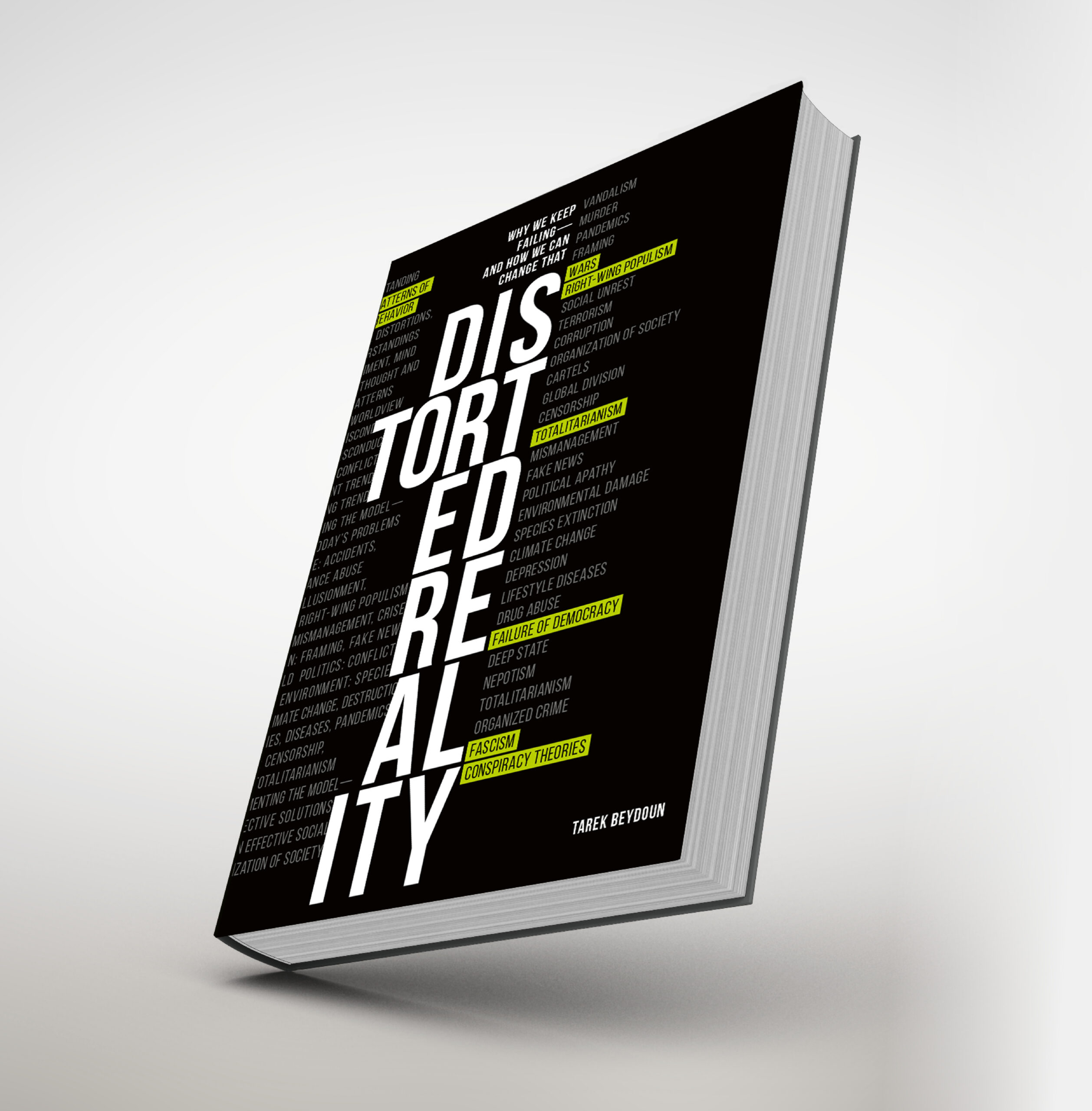
Those who want to understand the dangers of inequality more deeply—and find out what can be done about it—will find answers in
Distorted Reality -> Order here